 Add Row
  Add
Add 


What if you could stop chasing prospects and, instead, have customers come to you ? In today’s competitive landscape, traditional lead generation is no longer enough—especially when 55% of businesses practicing reverse lead generation report a dramatic surge in qualified inquiries. This guide will teach you how reverse prospecting and inbound tactics can position you as the expert, making new clients request your help before they ever hear your pitch.
Rewriting the Rules: Reverse Lead Generation and Its Surprising Impact
In the conventional world of lead generation , businesses pour resources into outbound efforts—cold calling, list buying, and aggressive marketing campaigns. These methods can generate leads, but they often overlook the importance of trust and relevance. Reverse lead generation , however, flips this dynamic. Rather than chasing every warm lead , you transform your marketing strategy to become the go-to resource in your industry. Imagine your ideal client seeking you out for advice, validation, or a solution to their pressing problem.
This shift empowers potential leads to approach you on their own terms—often after they’ve already consumed helpful content, engaged with your brand on social media , or seen your expertise showcased in their community. For professionals in real estate , digital marketing, or other service-oriented industries, this means less time spent on outreach and a dramatic boost in both lead data quality and conversion rates .
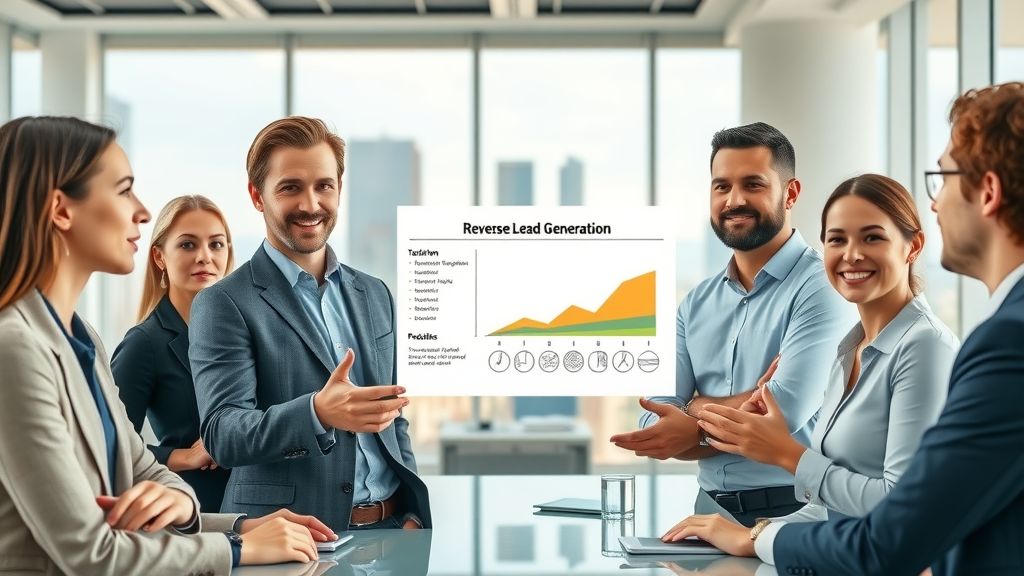
“Did you know that companies practicing reverse lead generation see up to a 55% increase in qualified customer inquiries compared to traditional outbound tactics?”
Understanding Reverse Lead Generation in the Context of Lead Generation
To fully appreciate reverse lead generation , it’s important to recognize how it differs from outbound approaches. Traditional lead generation is often about volume—reaching out to a wide target audience and hoping a small percentage will respond. In contrast, reverse prospecting is about drawing in prospects who already see you as a trusted expert.
-
Key differences between traditional lead generation and reverse lead generation:
-
Traditional approaches prioritize the sales process with persistent outreach and repetitive messaging. Reverse lead generation is rooted in thought leadership, where expertise acts as a magnet for potential clients .
-
Reverse lead generation leads to a shorter sales cycle , higher-quality leads, and a better conversion rate compared to traditional tactics.
-
-
How reverse prospecting changes the buyer/seller dynamic:
-
Customers are more engaged and have self-qualified, which means your sales team spends fewer resources convincing and more time closing.
-
The typical “pitch” is replaced by authentic conversations, transforming your business into a respected authority.
-
-
Core principles of reverse lead strategies in real estate and other industries:
-
Establish yourself as a thought leader through valuable content , community events, and social media engagement.
-
Optimize your business for inbound inquiries—make it simple for people to connect with you and enter your lead database when they’re ready.
-
Why Reverse Lead Generation Outperforms Traditional Lead Generation
Why are so many businesses—especially those in competitive fields like real estate and digital marketing—turning to reverse lead generation? The answer lies in conversion rates and the power of positioning. When customers actively seek you out, they’ve already passed through key stages of the sales funnel and are much closer to making a decision.
Reverse prospecting not only delivers a higher conversion rate but also nurtures customer trust more organically. Clients who initiate contact are more invested, perceive your expertise as valuable, and have greater confidence in your solutions. By building authority and warmth up front, you nurture warm leads rather than chasing cold contacts—a key advantage over outbound marketing strategies .
-
Comparing conversion rates: Reverse lead vs. conventional lead generation: Companies have reported conversion rates as high as 30-40% with reverse lead generation, compared to just 5-10% for typical cold campaigns.
-
The impact of reverse lead generation on lead nurturing and customer trust: Since clients initiate inquiries, nurturing becomes a consultative process focused on value, not persuasion. This deepens relationships and increases customer lifetime value .
-
Benefits of reverse prospecting for real estate professionals and service providers: For the real estate professional , reverse prospecting platforms and community-driven strategies produce fewer but higher-quality leads —ones who are ready to buy or sell, rather than “window shoppers.”

The Data Behind Reverse Lead Generation: Lead Data, Conversion Rates, and ROI
Analytics and lead data don’t lie: businesses who make the shift to reverse lead generation often achieve stronger returns with less energy expended. Let’s review why this is the future for effective lead generation .
|
|
|
Comparison Table: Reverse Lead Generation vs. Traditional Lead Generation |
|
Aspect |
Reverse Lead Generation |
Traditional Lead Generation |
|---|---|---|
|
Conversion Rate |
30–40% |
5–10% |
|
Cost per Lead |
Low–Medium (content creation & authority building) |
Medium–High (cold outreach, ads, database) |
|
Customer Lifetime Value |
High (loyalty & trust) |
Medium (higher churn) |
Implementing Reverse Lead Generation: Practical Methods and Tactics
So how do you actually integrate reverse lead generation into your marketing system ? It starts by establishing yourself as an authority and giving your target audience ample reasons to seek you out. This is particularly effective for real estate professionals and service providers who want to generate leads without relying solely on cold outreach.
One powerful tactic is harnessing social media as a platform for reverse prospecting. By sharing knowledge, answering questions, and facilitating conversations, you turn your channels into magnets for potential leads . Combine that with deeply valuable content—like guides and blog posts tailored to your audience’s challenges—and you’ll consistently attract inquiries from highly qualified prospects.
-
Leveraging social media for reverse prospecting:
-
Use live Q&As, educational videos, and value-driven posts to begin conversations rather than push sales.
-
Engage in relevant groups and forums to display your expertise authentically.
-
-
Establishing authority through valuable content and lead nurturing:
-
Publish blog posts, case studies, and industry analyses that answer your audience’s biggest questions.
-
Develop a consistent lead nurturing sequence that emphasizes support, not sales pressure.
-
-
Optimizing your lead database for incoming inquiries:
-
Ensure every landing page, form, and contact method routes directly to a well-organized lead database —ready for prompt, personalized follow-up.
-

Reverse Lead Generation for Real Estate: Unique Strategies That Generate Leads
Real estate is an industry where reverse prospecting thrives. Competition is fierce, and buyers crave genuine expertise. By leading community events or positioning yourself as a “neighborhood expert,” you establish trust with your target audience before they even need a new home.
Platforms specifically designed for reverse lead generation make it easy for agents and agencies to match with buyers and sellers who are ready to act. Participating in online forums, local workshops, and social initiatives amplifies your reach and gives potential buyers and sellers a direct path to your door.
-
Showcasing expertise via thought leadership and community events:
-
Organize workshops, participate in local fairs, and host webinars to provide value and build an audience naturally.
-
Share neighborhood guides and real estate market updates in your blog posts to keep your presence top-of-mind for local clients.
-
-
Utilizing reverse prospecting platforms to find interested buyers and sellers:
-
Join online portals that let you connect with warm leads who are actively seeking guidance, bypassing the cold calling and lead list chase.
-
-
Case study: How reverse lead generation improved a real estate agency’s results:
-
One agency shifted from outbound cold calls to a “thought leader” approach—hosting regular community webinars and publishing timely blog posts. In six months, their inbound inquiries tripled, conversion rates soared, and their lead database was full of quality leads ready to close.
-

Optimizing Lead Database for Reverse Lead Generation Success
A well-maintained lead database is crucial for capitalizing on reverse prospecting efforts. To ensure that inbound leads are responded to quickly and effectively, digital marketing teams and real estate professionals alike must implement automation and CRM best practices.
-
Best practices for maintaining lead data:
-
Regularly clean and segment your lead data to prioritize the most engaged prospects.
-
Keep detailed records of all interactions to personalize future communication and reduce drop-off in the sales funnel .
-
-
Integrating CRM and automation to track incoming queries:
-
A quality CRM integrates with your website, social channels, and forms to centralize all warm leads for easy follow-up.
-
-
Keeping your lead nurturing process customer-focused:
-
Automate reminders to follow up personally, but ensure that each outreach feels tailored and adds new value. A customer-first approach reduces churn and builds loyalty in your lead database .
-

Measuring Success: Tracking Conversion Rates and Improving Outcomes
If you want your reverse lead generation strategy to deliver lasting results, tracking the right metrics is essential. Focus your analytics on campaign KPIs that matter: conversion rates , the number of qualified incoming leads, and customer lifetime value.
Regular reviews of your campaign data allow you to optimize both your lead nurturing and follow-up efforts. For real estate and service-based businesses alike, fine-tuning your messaging and offers based on feedback and metrics drives more consistent, scalable results.
-
KPIs for reverse lead campaigns:
-
Conversion Rate: Percentage of inbound leads who become clients.
-
Response Time: How quickly your team follows up with inquiries.
-
Lead Source: Which content or platform drove the inquiry.
-
-
Monitoring and analyzing conversion rate:
-
Track conversion rates across different channels and continually test new approaches to determine what produces the highest-quality leads.
-
-
Tuning lead generation for optimal client engagement:
-
Evaluate customer feedback and refine your follow-up process to maximize impact and satisfaction at each stage of the sales funnel .
-
Overcoming Common Challenges in Reverse Lead Generation
Despite its advantages, reverse lead generation isn’t without hurdles. Some skeptics see it as “too passive” or misunderstand how to implement inbound tactics effectively. Buyer behavior is also evolving—today’s prospects expect self-service information and rapid responses.
Perhaps most crucially, as the volume of incoming queries grows, respecting privacy and consent when managing your lead data is non-negotiable. A clear, compliant process for handling personal information builds trust from the outset.
-
Addressing misconceptions about reverse prospecting:
-
Reverse lead generation isn’t about waiting for leads; it’s an active strategy to position your business as the obvious first call for your target audience.
-
-
Adapting to changing buyer behaviors:
-
Offer educational resources and frictionless contact experiences, matching the expectations of modern, well-informed buyers.
-
-
Dealing with lead data privacy and consent issues:
-
Implement opt-in forms, clear privacy policies, and data hygiene protocols to ensure every prospect’s information is secure and respected.
-
People Also Ask: The Top Questions on Reverse Lead Generation
What is the opposite of lead generation?
-
While lead generation focuses on outbound tactics to identify and attract prospects, reverse lead generation (or reverse prospecting) emphasizes inbound strategies that encourage potential customers to initiate contact and request assistance.
What are the 3 approaches of lead generation?
-
The three primary approaches to lead generation include outbound (actively reaching out), inbound (attracting leads with valuable content), and reverse lead generation or reverse prospecting (making customers approach you first, often through strategic positioning and thought leadership).
What is passive lead generation?
-
Passive lead generation refers to strategies that allow leads to discover and approach your business without direct outreach, such as through SEO, content marketing, and reverse lead generation techniques.
What is the best lead generation for real estate?
-
The best lead generation for real estate often combines traditional methods with reverse lead generation, leveraging thought leadership, community engagement, and platforms where potential clients seek trusted advisors.
Expanding on Success: Advanced Techniques in Reverse Lead Generation
Once you master the fundamentals of reverse lead generation, advanced tactics like A/B testing, AI-powered lead data analysis, and hyper-personalized outreach can take your results to the next level. Test different types of content, calls-to-action, and contact points to discover what attracts your most profitable leads.
Leveraging AI-driven tools allows you to spot trends, score leads based on real-world engagement, and nurture them with precision. When you tailor your outreach and follow-up strategies based on this data, conversion rates rise and your lead database becomes even more valuable.
-
A/B testing reverse prospecting methods
-
Utilizing AI-driven lead data analysis
-
Personalizing outreach to maximize conversion rates
Proven Tips and Best Practices for Reverse Lead Generation
-
Build authority by publishing regular, valuable content tailored to your target audience’s pain points.
-
Engage actively on social media platforms relevant to your industry to foster community trust.
-
Host or attend community events and webinars to showcase expertise and network with potential buyers and clients.
-
Keep your lead database spotless—segment, clean, and update records regularly.
-
Respond to inbound leads quickly and personally for higher conversion rates.
-
A/B test calls-to-action and landing pages to see which yield the best results.
-
Prioritize customer-centric lead nurturing over aggressive selling to build longer-lasting client relationships.
-
How to strengthen your lead nurturing strategy
-
Avoiding common mistakes in lead database management
“Not all leads are created equal: reverse lead generation delivers quality over quantity, letting your expertise attract the clients who need you most.”

Summary of What You’ll Learn in Reverse Lead Generation
-
The core principles of reverse lead generation and reverse prospecting
-
How to leverage lead data and optimize conversion rates
-
Practical tactics to generate leads via reverse lead strategies
-
Real-world examples from real estate and other industries
Frequently Asked Questions About Reverse Lead Generation
-
How does reverse lead generation work in B2B vs. B2C sectors? In B2B, reverse lead generation focuses on thought leadership content and strategic positioning in industry communities. In B2C, it often leverages social engagement, reviews, and community events to encourage inbound inquiries.
-
What are the best tools for managing a lead database in reverse prospecting? Leading CRMs like Salesforce, HubSpot, or Zoho integrate with websites, forms, and social media channels for seamless tracking and nurturing of warm, inbound leads.
-
What conversion rate benchmarks should you expect with reverse lead strategies? Many professionals report conversion rates of 30–40% with reverse lead generation, compared to industry averages as low as 5% for cold leads.
Take the Leap: Get Started with Reverse Lead Generation Today
-
Emphasize the benefits of making your expertise the magnet for new business: By switching to reverse prospecting, you’ll attract more engaged, high-value clients and spend less time on outdated outreach.
-
Encourage readers to adopt one reverse lead generation tactic this week: Select one actionable tip from this article—such as hosting a live Q&A or refreshing your content strategy—and begin your journey toward inbound, customer-driven growth.
Start transforming your marketing system by positioning yourself as the expert your customers seek out—adopt one new reverse lead generation strategy today!
Reverse lead generation, also known as reverse prospecting, is a strategy where businesses attract customers by positioning themselves as industry experts, encouraging potential clients to seek their services proactively. This approach contrasts with traditional outbound methods, focusing instead on creating valuable content and optimizing it for search engines to draw in highly qualified leads.
For a comprehensive understanding of reverse prospecting in B2B sales, consider reading “ What is Reverse Prospecting? [Guide] .” This resource outlines the steps involved, including creating high-value content, optimizing for search engines, and using lead magnets to convert traffic into leads. It also discusses tools and platforms that can aid in implementing reverse prospecting strategies effectively.
Additionally, “ Reverse Prospecting in Real Estate Explained ” provides insights into how reverse prospecting applies specifically to the real estate industry. It explains how agents can identify potential buyers who have already expressed interest in properties similar to their listings, thereby enhancing targeting and lead quality.
By exploring these resources, you can gain a deeper understanding of how reverse lead generation can transform your marketing strategy, leading to higher-quality leads and improved conversion rates.

Write A Comment